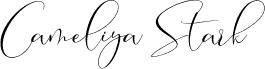
Invitation Script, a free calligraphic script by Iza and Paulo W of Intellecta Design, combines oversized, dramatic capitals with delicate, finely drawn hairlines. Long loops and sweeping flourishes dominate its silhouette across the lettering.
Designers working in wedding, hospitality, and luxury markets will find it suited to formal invitations, monograms, and beauty packaging. Fashion editorials and event signage can also use its elegant, theatrical movement as a focal point for names and headings. The recurring curls echo ribbon and engraved ornament, linking the lettering directly to ceremonial and richly decorative printed imagery.
--
Invitation Script Limited Free Version by Intellecta Design is a "limited free" version of Invitation Script with a limited set of glyphs.
The original font contains over 1,100 letters, and the family includes four other fonts. Commercial licenses are available for the original font and the complete family.
Intellecta Design researches and develops fonts based on historically and artistically relevant forms. This font is free software for personal and non-commercial use only. Donations for historical studies of letters, calligraphy, and typography are accepted.
The font may be distributed without limitation only if it is included in a ZIP file together with this text. Commercial use of this limited version only requires registration by sending US$15.00 to the following PayPal account:
estiliza@gmail.com
After payment, send an email to:
paulo.w.designer@gmail.com
A legal permission to use the font will then be sent to you.
Invitation Script is based on the script of the Portuguese calligrapher Manuel de Andrade de Figueiredo, whose work appears in Nova Escola para aprender a ler, escrever, e contar (1722).
Invitation Script is the third script superfamily published by Intellecta Design, after Penabico and Van den Velde Script. It contains original letters designed by Iza W. Paulo W. provided creative direction and core programming. Chyrllene K. assisted with archaic styles, resulting in the special font Invitation Script Archaic, which was soon to be available.
Invitation Script originated from Andrade's script style and developed into a font family. The family includes two multi-table OpenType fonts, three supplementary fonts for ornaments and fleurons, and the Archaic font, which contains some of Andrade's original characters.
The regular fonts embed additional sets of letters. More than 40 variations are available for certain letters through the Special Sets OpenType table.
The two regular versions of Invitation Script contain:
- An extensive set of ligatures providing letterform variations, accessible through contextual alternates and other OpenType features.
- Stylistic alternates for uppercase and lowercase letters, accessed through the glyph palette and encoded in the ranges of the Special Sets OpenType feature. Each font contains over 1,100 glyphs.
- Ornaments and fleurons, accessed with the glyph palette or the Ornaments feature. Additional ornaments are included in the two Invitation Script Ornaments fonts.
- Initial and final letters with variations, accessible through the initial- and final-form OpenType features.
- Over 6,000 manually set kerning pairs to avoid collisions and create combinations using swashes and other resources.
These features are accessible in InDesign, Illustrator, QuarkXPress, and similar software. In applications without OpenType support, Invitation Script remains a calligraphic typeface.
The regular fonts contain the complete Latin alphabet, including Central European, Vietnamese, Baltic, and Turkish characters, with a full set of diacritics and punctuation marks.
The cited work is:
FIGUEIREDO, Manuel de Andrade de, 1670–1735. Nova Escola para aprender a ler, escrever, e contar. Offerecida a Augusta Magestade do Senhor Dom João V, Rey de Portugal. Primeira parte / por Manoel de Andrade de Figueiredo, Mestre desta Arte nas cidades de Lisboa Occidental e Oriental. Lisboa Occidental: na Officina de Bernardo da Costa de Carvalho, Impressor do Serenissimo Senhor Infante, 1722. [18], 156 p., 44 f. grav. a buril: il.; 2 (31 cm).
The book contains an engraved royal coat of arms supported by angels over the city of Lisbon and an engraved portrait of the author, both by Bernard Picart. It also contains (12) leaves, 156 pages, an engraved calligraphic section title, 44 engraved plates, wood-engraved culs-de-lampe, and lettrines. It is a small folio.
Andrade de Figueiredo was born in Espírito Santo, where his father was governor of the Capitania. The portrait is dated 1721 and shows Figueiredo at the age of 48. He was a calligrapher and a creator of Portuguese handwriting until the reign of Don José I, around 1755.
His work follows the styles of Italian masters and the Spanish writing master Díaz Morante, using clubbed ascenders and descenders. His contemporaries knew him as the “Morante português” (Ekström).
The book is a manual composed of four parts, intended to teach reading, writing, counting, and spelling. Its plates contain examples of handwriting, alphabets, and texts with pen flourishes.